


Key Takeaways
Competitor keyword gap analysis identifies the search terms your competitors rank for that your site does not. By comparing keyword rankings across competing domains, you can discover missed queries, understand where competitors hold stronger positions, and build a clearer picture of which topics and keywords deserve attention in your SEO roadmap.
Your competitors rank for keywords that bring them search visibility while your site does not. A competitor keyword gap analysis shows which terms those are, so you can stop guessing what content to create and focus on topics with existing search demand. You can see what performs in your niche, which topics attract search volume, and where gaps exist in your current keyword coverage.
This keyword research technique provides a shortcut to rankings that competitors have already validated with their own resources. You'll find high-intent keywords at every funnel stage, spot content weaknesses you can outrank, and build a strategy based on real opportunities instead of hunches.
What Is a Competitor Keyword Gap Analysis?
A competitor keyword gap analysis uncovers the specific keywords your competitors rank for that you don't, or where they outperform you significantly. This technique gives you a direct path to content opportunities already proven to attract search demand and traffic. Instead of guessing which topics might work, you're building a strategy around validated demand. You're looking for three categories: keywords competitors rank for that you miss entirely, keywords where competitors rank in the top results while you fall outside the top 10, and keywords where you both rank on page one but competitors consistently appear higher and capture more visibility. According to our B2B SEO Tools review, platforms like Semrush and Ahrefs have refined their gap analysis features to surface these opportunities faster than manual SERP checks ever could.
The Difference between Keyword Gap and Content Gap
A keyword gap focuses purely on ranking discrepancies for specific search terms. A content gap examines broader topical coverage – subjects competitors address that your site lacks. You might rank for “email marketing tools" but have zero content covering “email deliverability best practices" while competitors dominate that space. The keyword gap tells you which specific phrases to target, the content gap reveals entire topic clusters you're missing. Both analyses complement each other, and understanding the difference becomes much easier if you’re already familiar with foundational B2B keyword research principles.
Why You Should Conduct a Competitor Keyword Gap Analysis
Rather than reacting to competitors, a keyword gap analysis shows where visibility gaps exist and which keywords are already active in your market. You’ll see search terms that bring traffic to competitor sites while your pages remain invisible, identify areas where their content performs better than yours, and outline priorities based on actual performance data instead of guesswork.
Leverage Competitors' Research to Save Time
Your competitors have already spent time and money figuring out which keywords attract visitors. When you conduct a competitor keyword gap analysis, you’re essentially borrowing their research instead of running months of experiments yourself. They've identified the terms that bring potentially qualified traffic and invested in content that ranks, so you can go straight to what already works.
This approach dramatically reduces keyword research time. Instead of brainstorming hundreds of phrases, you start with a proven list: the keywords competitors rank for in the top ten, the terms driving their traffic, and the topics they prioritize. From there, you simply evaluate which keywords align with your goals and where you have a real opportunity to outrank them.
Discover High-Intent and Low-Competition Keywords
Not every keyword your competitors target will fit your strategy, but gap analysis uncovers two particularly valuable categories: high-intent terms where competitors rank weakly and low-competition phrases they've claimed without strong authority. High-intent keywords – terms like “best project management software for remote teams" or “affordable CRM for startups" signal searchers who are closer to making a purchase decision. When competitors rank for these but hold positions outside the top three, you have a chance to capture that conversion-ready traffic.
Low-competition keywords often emerge when competitors rank for niche or long-tail phrases without developing solid content around them. These terms might have lower search volume individually, but together they can generate significant traffic.
B2B SEO tools let you filter keywords by difficulty score, search volume, and intent, making it easier to compare your keyword profile against competitors. You can focus on terms where competitors rank in positions four through ten, giving you a realistic shot at outranking them with better content. You can also spot transactional keywords competitors bid on in paid search but haven't targeted organically, revealing opportunities to capture that traffic without advertising costs.
Build a Data-Driven Content Roadmap
Once you've identified keyword gaps, you can connect them directly to your content calendar and funnel stages. Terms with informational intent support your top-of-funnel content, comparison and “best of" keywords serve mid-funnel evaluation, and transactional phrases inform bottom-funnel pages. This framework ensures every piece of content you create has a strategic purpose and targets keywords with verified demand.
You'll also find topic clusters that competitors have developed that you're missing. If three competitors rank for variations of “email marketing automation," “email segmentation strategies," and “email deliverability tips," you can outline a content cluster covering all those angles. This approach strengthens your topical authority and improves your chances of ranking for related terms. You're not just targeting individual keywords, you're creating a network of connected content that demonstrates expertise to search engines and offers thorough resources to users.
Step-by-Step: Conduct a Competitor Keyword Gap Analysis
Running a competitor keyword gap analysis requires a structured approach. You'll move from identifying the right competitors through extracting their keyword data to building a content strategy that capitalizes on the opportunities you uncover. Each step builds on the previous one, creating a roadmap that transforms raw data into rankings.
Step 1: Identify Your True SERP Competitors
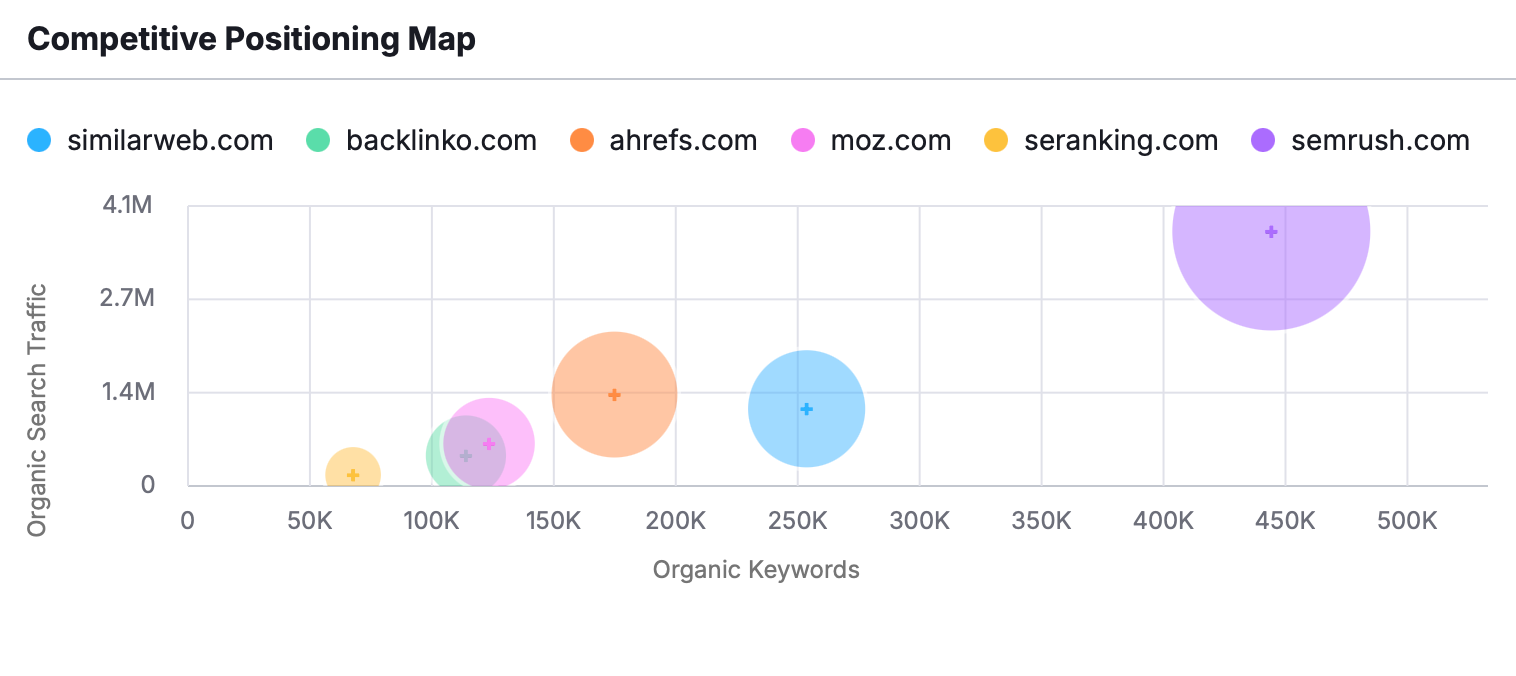
Your actual search competitors aren't always the brands you consider business competitors. A software company might compete with industry blogs, comparison sites, and educational platforms for the same keywords, sites that would never compete for the same customers. Start by searching your five most important keywords and noting which domains consistently appear in positions one through ten. These are your real competitors for visibility.
You can also use SEO tools to identify competitors automatically. Enter your domain and these platforms will show you which sites share the most keyword overlap with yours. Focus on domains that rank for at least 20-30% of your target keywords – these represent your direct competition for search traffic. Don't limit yourself to direct product competitors; include content publishers, directories, and niche blogs that capture your audience's attention.
Step 2: Map Competitor Keywords
Once you've identified your competitors, extract their keyword lists using filters such as ranking position and search intent. Focus on keywords where competitors rank in the top ten results, then categorize those terms by intent: informational, commercial, navigational, or transactional.
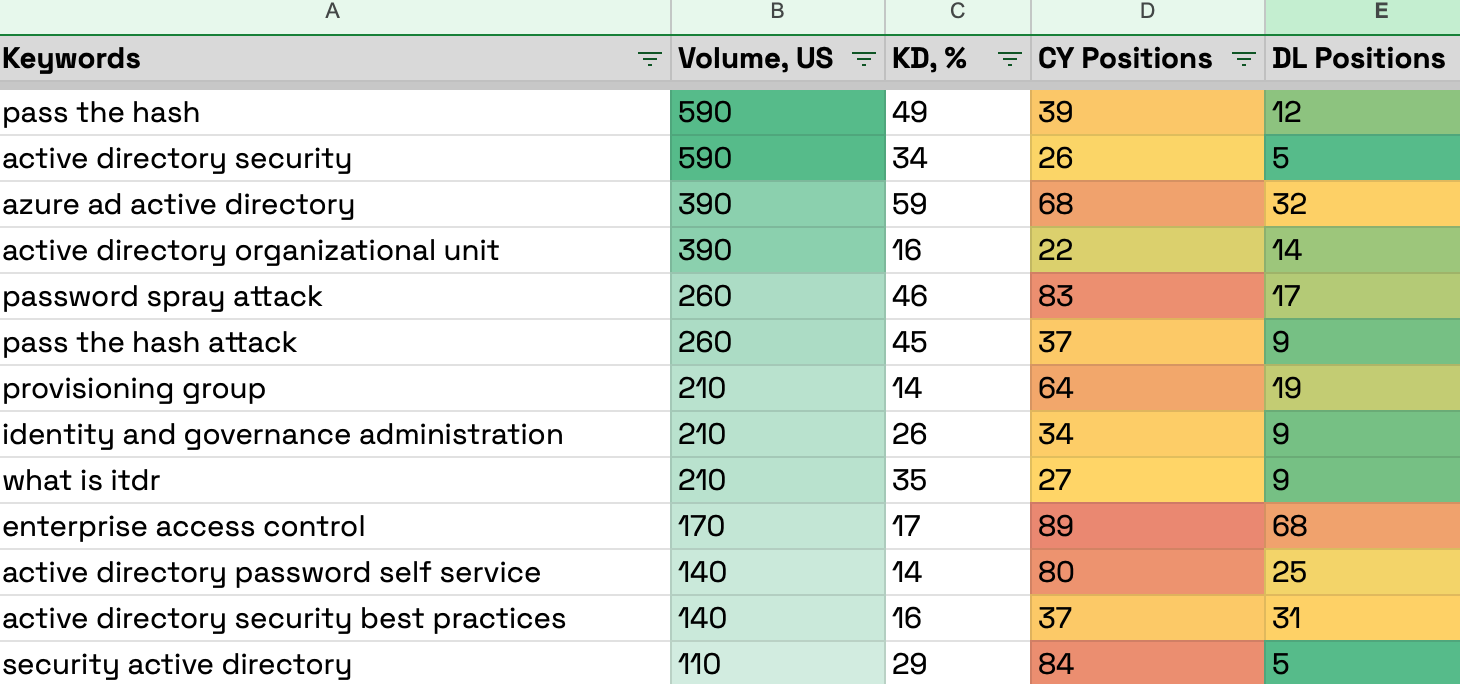
Organize this data in a spreadsheet with columns for keyword, competitor ranking position, search volume, difficulty score, and intent category. This structure makes pattern recognition easier when you move to the gap identification phase. Look for clusters where competitors dominate multiple related terms – these topic areas represent established authority you'll need to challenge strategically.
Step 3: Find Your Keyword Gaps
Now compare your keyword rankings against your competitors' lists. You're looking for four specific gap types: missing keywords where competitors rank, but you have no visibility, untapped keywords where at least two competitors rank, but you don't, weak keywords where you rank below position ten while competitors hold top-five spots, and opportunity keywords that combine reasonable difficulty with high commercial value. Most gap analysis tools will surface these automatically, but manual review helps you spot nuances the algorithms miss.
Step 4: Refine and Prioritize Keyword Opportunities
Not every gap deserves immediate attention. Score each opportunity using a simple framework: assign points based on search volume (1-3 points), difficulty score (3 points for low difficulty, 1 for high), commercial intent (3 points for commercial, 1 for informational), and competitor content quality (3 points if existing content is weak, 1 if it's strong). Keywords scoring 8+ become your priority targets. This scoring system prevents you from chasing high-volume terms that are either too difficult or won't drive conversions.
Step 5: Turn Gaps Into Content Strategy
Map your prioritized keywords to specific content actions. Quick-win keywords with low difficulty scores get new standalone articles or landing pages. Medium-difficulty terms might require building supporting content clusters first to establish topical authority. High-difficulty keywords need a long-term approach involving multiple interconnected pieces and strategic link building. Create a content calendar that addresses at least three gap keywords per month, ensuring each piece targets a clear search intent and provides value beyond what competitors currently offer.
Step 6: Execute and Monitor Results
Track your keyword positions weekly for the first month after publishing new content, then monthly thereafter. Set up automated rank tracking for your target gaps so you can spot movement quickly. Compare your performance against the same competitors you analyzed initially-are you closing the gaps? If keywords don't improve after 90 days, revisit the content to identify what competitors have that you lack. Repeat the full gap analysis quarterly to catch new opportunities as competitors adjust their strategies and search demand shifts.
Common Mistakes and How To Avoid Them
Running a competitor keyword gap analysis gives you powerful insights, but execution mistakes can waste time and send you after the wrong opportunities. Many teams jump into competitor data without a clear plan, and then can't turn those findings into actual rankings. Spotting these common pitfalls before you make them saves resources and speeds up results.
Targeting Keywords That Don't Align With Business Goals
You'll uncover hundreds of keywords your competitors rank for during gap analysis. It's tempting to go after all of them. That approach spreads your resources too thin and rarely impacts revenue. A competitor might rank for "free project management templates" while your SaaS product serves enterprise buyers who need advanced features. That keyword brings traffic, but those visitors won't become paying customers.
Filter opportunities through your actual business model and customer profile. Ask whether each keyword connects to a specific stage in your funnel. Informational keywords support awareness, comparison terms serve evaluation, and transactional phrases drive conversions. If a keyword doesn't support one of these goals, remove it from your target list, no matter how well competitors perform with it.
Focus on keywords where search intent matches what you offer. Map keywords to commercial objectives before creating content. This alignment ensures every piece you publish serves a strategic purpose rather than simply filling a content calendar.
Ignoring Search Intent and User Context
Keyword difficulty scores and search volume numbers tell you part of the story. They don't reveal what users actually want when they search. A gap analysis might show competitors ranking for “email marketing platforms," but the SERP could be packed with comparison articles, feature breakdowns, or buying guides. If you create a product page targeting that term, you'll struggle to rank because you're not matching the dominant intent.
Analyze the SERP before you commit to targeting a gap keyword. Look at the top ten results and categorize their content types: listicles, how-to guides, product pages, comparison charts, or landing pages. If nine of the top results are comparison articles and yours is a product page, you're fighting an uphill battle. Match your content format to what Google already ranks for that query, then stand out through depth, clarity, or unique data.
From Keyword Gaps to SEO Execution
A competitor keyword gap analysis is only the starting point of execution, not the outcome itself. In practice, gap findings need to be translated into clear content decisions and sequencing. Missing keywords often point to deeper issues: gaps in funnel coverage, pages that exist but don’t fully satisfy search intent, weak internal linking that prevents rankings from consolidating, or entire topic areas where competitors outperform through depth rather than individual articles.
This is why keyword gaps are most effective when reviewed alongside content structure, internal links, and technical signals. A list of keywords doesn’t improve rankings on its own. What matters is deciding which pages should be created first, which existing pages should be expanded, which topics require supporting content, and which opportunities are realistic based on current authority.
At Entlify we use keyword gap analysis in practice: as an input for content planning and SEO execution, not as a standalone report. When gaps are evaluated in context, they become a framework for systematic growth rather than a collection of isolated keywords. Contact us if you want to turn competitive keyword gaps into a strategic keyword roadmap that improves rankings and connects you with prospects actively searching for the solutions you offer.
FAQs
How often should you run a competitor keyword gap analysis?
Run a full competitor keyword gap analysis quarterly to catch shifts in competitor content strategies and emerging search opportunities. If you operate in a fast-moving industry or notice sudden competitor traffic changes, conduct spot checks monthly on your highest-priority keywords.
Can keyword gap analysis work for brand-new websites with no rankings?
Yes, new sites benefit even more from gap analysis because you're building your entire content strategy around validated opportunities instead of guessing what might work. Focus on low-difficulty keywords where competitors rank in positions 4-10, giving you realistic targets despite limited domain authority.
What's the minimum number of competitors you should analyze for accurate results?
Analyze at least three to five direct SERP competitors to get meaningful patterns in keyword opportunities. Fewer than three won't show you consistent gaps, while more than seven creates data overload without adding proportional insight.
Should you include branded keywords when conducting competitor keyword gap analysis?
Exclude competitor-branded terms unless you're analyzing brand awareness strategies or defensive tactics. Branded keywords artificially inflate their rankings and won't provide actionable opportunities since those searches specifically seek your competitor's business.
What keyword difficulty score gives you the best chance of ranking quickly?
Target keywords with difficulty scores between 20-40 if you have moderate authority, or below 30 for newer sites. These scores indicate competition is present but not dominated by high-authority sites, giving you room to rank with quality content and strategic optimization.