


Key Takeaways
Backlink management involves regularly auditing your link profile, removing toxic links that harm rankings, and building connections with authoritative sites that strengthen your SEO and AI search visibility.
Pages ranking first in Google search results have, on average, 3.8 times more backlinks than those in positions 2-10. Having enough backlinks plays a big role in determining whether your company gets discovered by potential customers or disappears on page three.
The tricky part is that you don't fully control your backlink profile. Any site can link to you at any time, and many of them will. Some of those links come from spammy directories, irrelevant blogs, or low-quality pages that exist mainly to game search engines. When enough of those pile up, they can dilute the authority of your legitimate links and make your overall profile look suspicious to search algorithms (both traditional Google search and AI-powered engines like ChatGPT and Perplexity).
Backlink management means staying on top of that profile: knowing what's pointing to your site, understanding which links help versus hurt, and actively building connections that carry real weight. This guide walks you through how to audit your existing links, handle the problematic ones, and earn new links that actually improve your rankings.
Why Backlink Management Matters for SEO and AI Search
Every link pointing to your site tells search engines something about you. The source, the context, the anchor text, and the surrounding content all factor into how algorithms interpret that signal. A well-managed backlink profile reinforces your authority in a given topic area. A neglected one can create noise that makes it harder for algorithms to understand what your site is actually about.
It's worth addressing a common misconception here: Google has gotten much better at ignoring low-quality links rather than penalizing you for them. Their algorithms have grown more sophisticated over the years, and a handful of weak or irrelevant links won't automatically tank your rankings. That said, ignoring your backlink profile entirely is still a mistake. Large volumes of spammy links, especially from link farms or sites with malicious patterns, can still trigger manual actions. More importantly, the links you're not building are just as significant as the ones you're cleaning up.
The case for backlink management often comes down to competitive positioning. If your competitors are earning links from authoritative industry publications and you aren't, that gap shows up in rankings. Whether AI-powered search tools like Perplexity or ChatGPT factor into your specific audience's research process depends heavily on your industry and buyer profile. For some buyers, these tools are part of how they discover vendors. For others, they aren't yet. Either way, the underlying signal remains the same: sites with strong, relevant backlink profiles tend to get referenced more broadly across all types of search.
How Backlinks Influence Traditional Search Rankings
Backlinks have remained a core ranking factor through every major algorithm update Google has shipped. Your backlink profile tells Google whether your site deserves to rank for specific queries, based on who's linking to you and how those links are structured.
Quality matters far more than volume. A single link from an authoritative industry publication carries more weight than dozens of directory listings. Google evaluates link relevance, the authority of the linking domain, anchor text diversity, and whether your link profile looks natural or manufactured. Most SEO professionals identify link relevance as the primary metric when assessing backlink quality.
The Role of Backlinks in AI-Powered Search Engines
AI search platforms like ChatGPT, Perplexity, and Google's AI Overviews don't just scrape content randomly. They prioritize sources with established authority, and backlinks help determine which sites meet that threshold. When these platforms generate responses, they reference sites that demonstrate expertise through their link profiles and content quality.
Appearing in AI-generated responses can be as valuable as ranking on page one of Google, especially as search behavior shifts toward conversational queries.
What Happens When You Ignore Your Backlink Profile
Neglecting your backlinks creates real risk over time. Sites link to you without permission, and not all of those links are neutral. Large volumes of links from spammy directories or link farms can still raise flags, and a manual action from Google is genuinely painful to recover from.
Broken links are another issue. Research from Ahrefs found that 66.5% of links analyzed over nine years had rotted, meaning they no longer pointed to their intended destination. When valuable backlinks break, you lose both the SEO benefit and the referral traffic they generate. Regular audits catch these issues before they compound.
What Backlink Management Actually Involves
Backlink management goes beyond watching who links to you. It's about actively shaping your link profile to maximize SEO value while protecting your site from harmful associations. Think of it as curating a professional network – you want connections that strengthen your reputation, not drag it down.
This process requires consistent attention. Your competitors are building links. Your industry is changing. And search algorithms are constantly reassessing which sites deserve to rank. Effective backlink management keeps you competitive in all three areas.
Monitoring Your Inbound Links
Monitoring means tracking who links to you, when those links appear, and what signals they send to search engines. You need visibility into your backlink profile at all times because links appear and disappear without your permission.
Start by setting up Google Search Console, which provides basic backlink data at no cost. This tool shows you which domains link to your site, which pages receive the most backlinks, and how your link profile changes over time. For deeper analysis, consider tools like Semrush or Moz that offer metrics such as domain authority, anchor text distribution, and link velocity.

Regular monitoring helps you spot patterns. A sudden spike in backlinks might indicate a successful content campaign or a negative SEO attack. A gradual decline could mean valuable links are breaking or competitors are outpacing you. Either way, you need the data to respond appropriately.
Identifying and Removing Toxic Backlinks
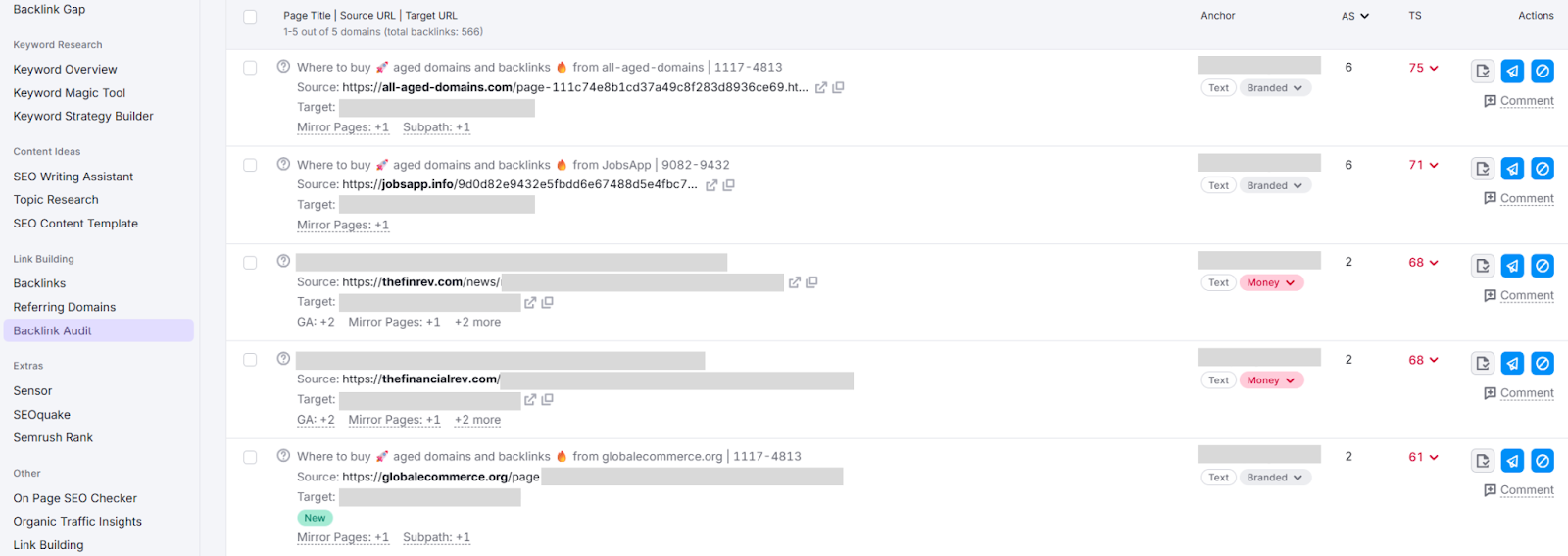
Toxic backlinks come from low-quality sites that can harm your search rankings instead of helping them. These include spammy directories, link farms, hacked sites, and irrelevant blogs that exist solely to manipulate search results.
When you identify toxic backlinks during your audit, you have two options: request removal or disavow them through Google's Disavow Tool. Requesting removal works when you can contact the site owner directly and ask them to take down the link. Disavowing tells Google to ignore specific backlinks when evaluating your site, which protects you from penalties.
Not every low-quality link requires action. A handful of weak links won't destroy your rankings if you have a strong foundation of authoritative backlinks. Focus your efforts on removing or disavowing links from sites with spam scores above 60 (in Semrush), irrelevant anchor text stuffed with keywords, or domains flagged for violating Google's guidelines.
Building New High-Quality Connections
Building quality backlinks means earning links from authoritative sites that enhance your credibility. These connections don't happen by accident; they result from strategic outreach, valuable content, and genuine relationships within your industry.
Focus on three proven approaches: creating content worth linking to, reaching out to relevant sites with specific link requests, and participating in industry communities where natural links develop over time. Each method requires different skills but contributes to a balanced link profile that search engines reward.
Quality always beats quantity. A single link from an established website carries more weight than dozens of directory listings. Prioritize opportunities that align with your niche, reach your target audience, and come from sites with strong domain authority. This targeted approach builds momentum that compounds over time as more authoritative sites discover and reference your content.
How to Audit Your Backlink Profile in 6 Steps
A backlink audit is more straightforward than it sounds. The right tools do most of the heavy lifting. You're mainly looking for patterns: which links are helping, which ones are creating problems, and where the gaps are compared to your competitors. Working through this systematically, rather than checking links at random, is what makes the results usable.
Step 1: Choose Your Backlink Analysis Tools
Semrush is a good starting point for most teams because it gives you a detailed backlink profile in one place. To pull your backlink data, go to the Backlink Analytics section, enter your domain, and run the report. You'll see referring domains, anchor text, authority scores, and a breakdown of link attributes like dofollow versus nofollow.
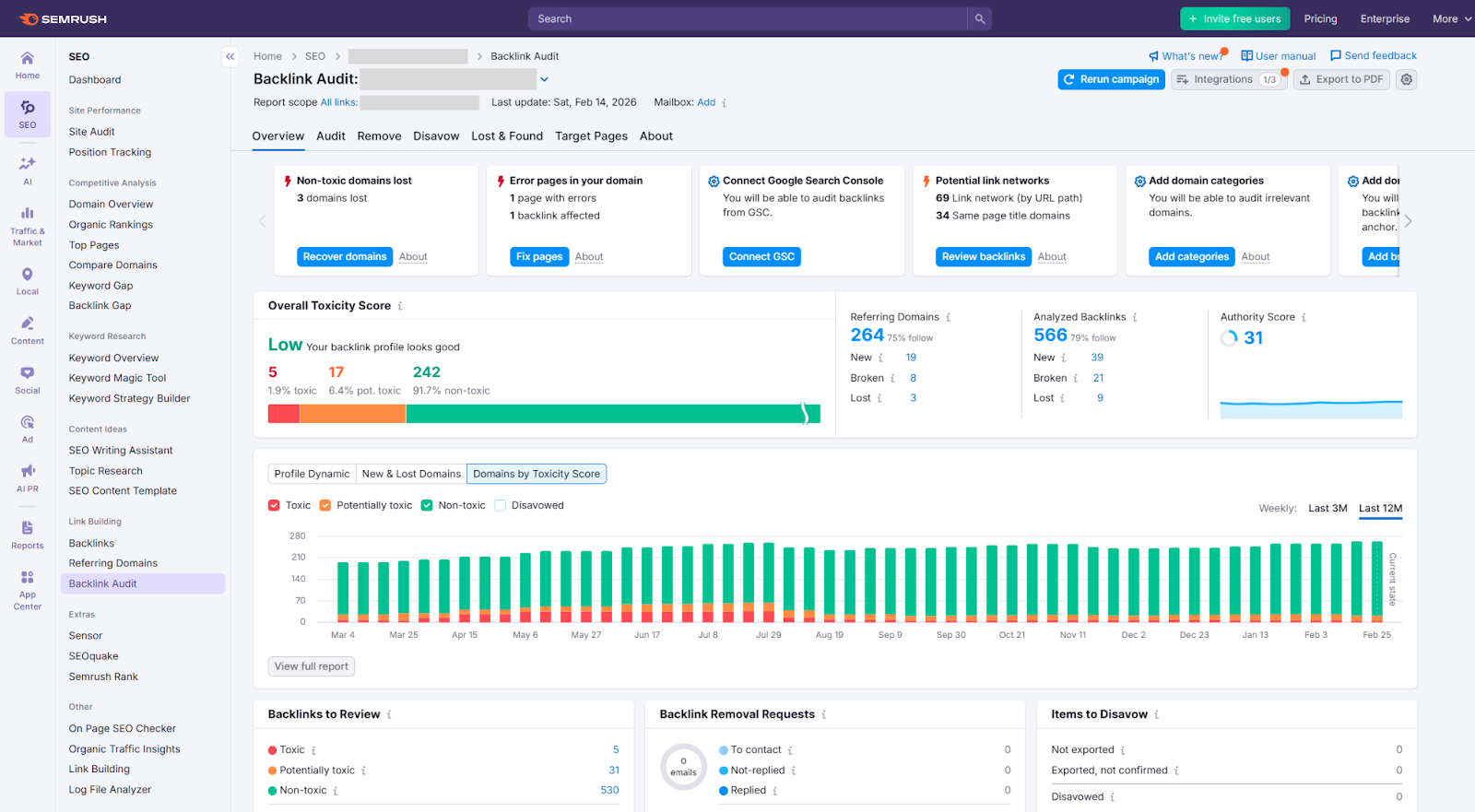
Google Search Console is worth using alongside Semrush because it reflects what Google has actually indexed. Go to the Links section in Search Console to see your top-linked pages and the domains linking to them most frequently. It won't give you spam scores or authority metrics, but it's a reliable source for understanding which links Google is actively counting.
Using both tools together gives you a fuller picture. Semrush catches links that Search Console doesn't always surface, and Search Console confirms what Google is actually registering. Export the data from both into a spreadsheet so you can work through everything in one place.
Step 2: Export and Consolidate Your Data
Once your tools are set up, export backlink reports from each platform. Most tools let you download CSV or Excel files containing referring domains, anchor text, link attributes, and quality scores. Merge these into a single spreadsheet where you can compare everything side by side.
Clean up duplicate entries and standardize the formatting across columns. Create separate tabs for referring domains, anchor text patterns, and broken or toxic links. This makes it much easier to spot issues during the analysis phase. Add a column for notes so you can flag links that need follow-up or immediate action.
Step 3: Identify Toxic and Broken Links
Now you're looking for problems. Toxic links typically come from spammy directories, link farms, or sites with content that has no connection to your business. The main red flags are spam scores above 60, anchor text stuffed with commercial keywords, links from hacked sites, and domains with no topical relevance to what you do.
Broken links are a separate issue. They point to pages on your site that no longer exist, which means the SEO value those links could be passing is just lost. Mark each problematic link in your spreadsheet with a priority level: high for toxic links that pose real risk, medium for broken links from high-authority domains, and low for weak links that don't need urgent attention.
Step 4: Take Action on Problem Links
Once you've identified toxic and broken links, start with outreach. For toxic backlinks, contact the site owner and request removal. Keep the email short and professional: explain that the link wasn't something you authorized and ask them to remove it. Many won't respond, and that's where Google's Disavow Tool comes in. Upload a list of domains or specific URLs you want Google to discount when evaluating your site.
For broken links, reach out to the webmasters of referring domains and give them the correct URL. Most site owners are willing to update a broken link once you point it out. This recovers the link equity you were losing and restores any referral traffic that was coming from those pages.
Step 5: Identify High-Value Link Opportunities
Once your profile is clean and you have a clear picture of where you stand, the next step is finding sites worth targeting. The most efficient way to do this is by looking at where your competitors are already getting links.
In Semrush, go to the Backlink Gap tool and enter your domain alongside two or three competitors. The tool shows you referring domains that link to your competitors but not to you. These are your best targets because the sites have already shown a willingness to link to similar businesses in your space.
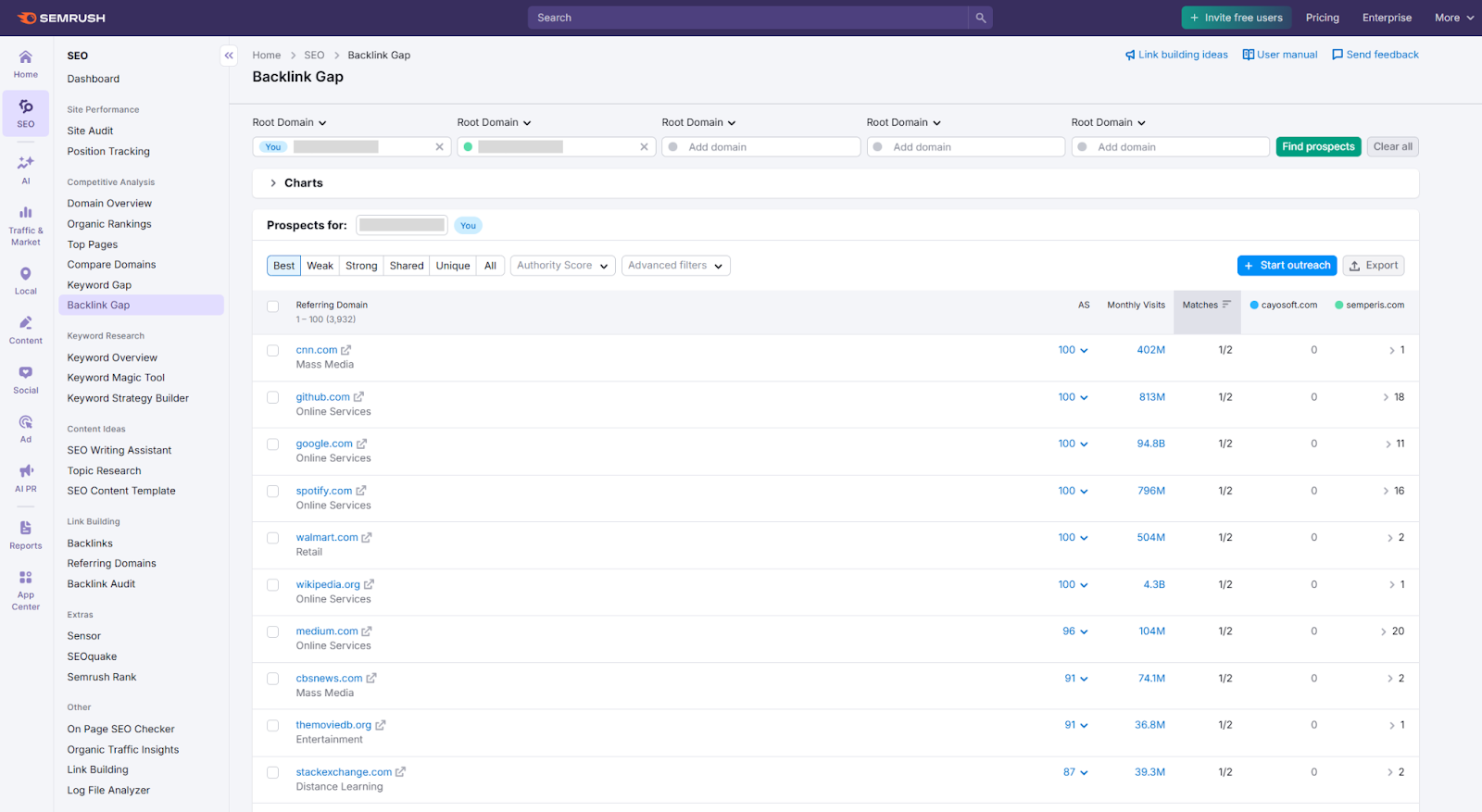
Filter the results by Authority Score and topical relevance. A link from a high-authority site that covers your category closely is worth significantly more than a link from a generic directory with a high domain rating. Build a shortlist of the top opportunities and move to outreach.
Step 6: Execute a Strategic Outreach Campaign
With your target list ready, you must move from identification to acquisition. High-quality backlinks are rarely accidental – they result from providing value to other site owners. Three specific outreach strategies tend to move the needle:
- The “Broken Link" Technique: Find pages on authoritative sites that link to dead resources (competitor pages that no longer exist). Reach out to the webmaster to let them know about the broken link and suggest your relevant, high-quality content as a superior replacement.
- Guest Posting for Authority: Pitch unique, data-driven insights to industry publications. Instead of a generic sales pitch, offer original research or a “how-to" guide that solves a specific problem for their audience. A single link within a high-traffic, relevant article is worth more than dozens of low-quality placements.
- Resource Page Inclusion: Many industry organizations and tech blogs maintain “Best Software for [X]" or “Complete Guide to [Y]" pages. Contact these editors with a concise explanation of how your tool adds unique value to their existing list.
The goal of link building is to create a natural, diverse profile. By consistently reaching out to relevant, high-authority domains, you build a “moat" around your search rankings that is difficult for competitors to overcome.
Need help managing your backlink profile without the time investment? Contact us to learn how our team handles ongoing backlink management.
Conclusion: Taking Control of Your Backlink Profile
Your backlink profile directly influences how search engines and AI platforms judge your authority. When you let it sit unmanaged, it turns into a problem that pulls down rankings and throws away the SEO work you've already put in. Taking control requires running consistent audits, cutting out harmful links before they cause penalties, and forming relationships with sites that actually carry weight in your field. Companies that treat backlink management as something they do regularly, rather than a quick fix when things go wrong, tend to rank better than those who only pay attention when damage shows up. Run your first audit, fix what needs fixing, and create a routine that keeps everything in good shape. The rankings you maintain now directly affect the traffic you'll see down the road.
FAQs
What is backlink management and why does it matter?
Backlink management is the ongoing process of monitoring who links to your site, removing harmful connections, and building relationships with authoritative domains that strengthen your search rankings. It matters because an unmanaged link profile accumulates toxic links that can trigger penalties and cause your rankings to drop, while a well-maintained profile signals trust to both search engines and AI platforms.
How often should you audit your backlinks?
Most companies should run comprehensive backlink audits quarterly to catch problems before they compound, though monthly spot-checks make sense if you're running active link-building campaigns or competing in aggressive niches. The key is establishing a consistent schedule rather than only auditing when you notice ranking drops.
Should nofollow backlinks be included in your backlink management strategy?
Yes, nofollow links still matter because they drive referral traffic, build brand awareness, and create a natural-looking link profile even though they don't directly pass SEO authority. A healthy backlink profile includes a mix of both follow and nofollow links, as having only followed links can appear manipulative to search engines.
What types of backlinks should you disavow immediately?
Disavow links from spam sites with scores above 60, link farms, hacked domains, sites with no topical relevance to your business, and any domains using exact-match commercial anchor text that looks manipulative. Focus your disavow efforts on links that pose immediate penalty risk rather than every low-quality link, since a few weak links won't hurt you if your overall profile is strong.
How do you categorize backlinks to prioritize which ones need attention?
Categorize backlinks by three factors: quality (spam score and domain authority), relevance (topical alignment with your industry), and status (active, broken, or toxic). This system lets you prioritize high-authority broken links for recovery, toxic links for removal, and low-quality irrelevant links for monitoring or disavowal.