

Key Takeaways
Agentic search is a shift in which AI agents autonomously browse, evaluate, and compare websites on behalf of users before they ever see the results, fundamentally changing how brands get discovered. Marketers can prepare by layering agentic search optimization on top of existing SEO through structured data, clean HTML, accessible product information, and monitoring AI agent traffic in server logs.
Google recently introduced Google-Agent, a new user agent that identifies when an AI is browsing on someone's behalf. “Agentic" refers to AI systems that automate entire processes, not single tasks. That shift matters because AI agents are now browsing, comparing, and acting on behalf of users before they ever see your site.
For marketers, this raises an urgent question: can an AI agent find, understand, and recommend your brand? That's the core of agentic search optimization, and it builds directly on the SEO work you're already doing.
This article explains what agentic search means in practice and provides five concrete steps to prepare. Whether you run marketing at a SaaS startup or lead strategy at a B2B enterprise, these are things you can act on today.
What Is Agentic Search?
Search has followed the same pattern for decades: type a query, scan a list of results, click a link, repeat. Agentic search breaks that pattern entirely. It hands the searching, filtering, and decision-making over to an AI agent that works on your behalf.
From Answering Questions to Completing Tasks
Traditional search engines respond to a question with a list of links and leave the rest to you. Agentic search flips that relationship. Instead of returning a page of links and hoping you find what you need, an AI agent takes your goal, breaks it into steps, and executes those steps autonomously.
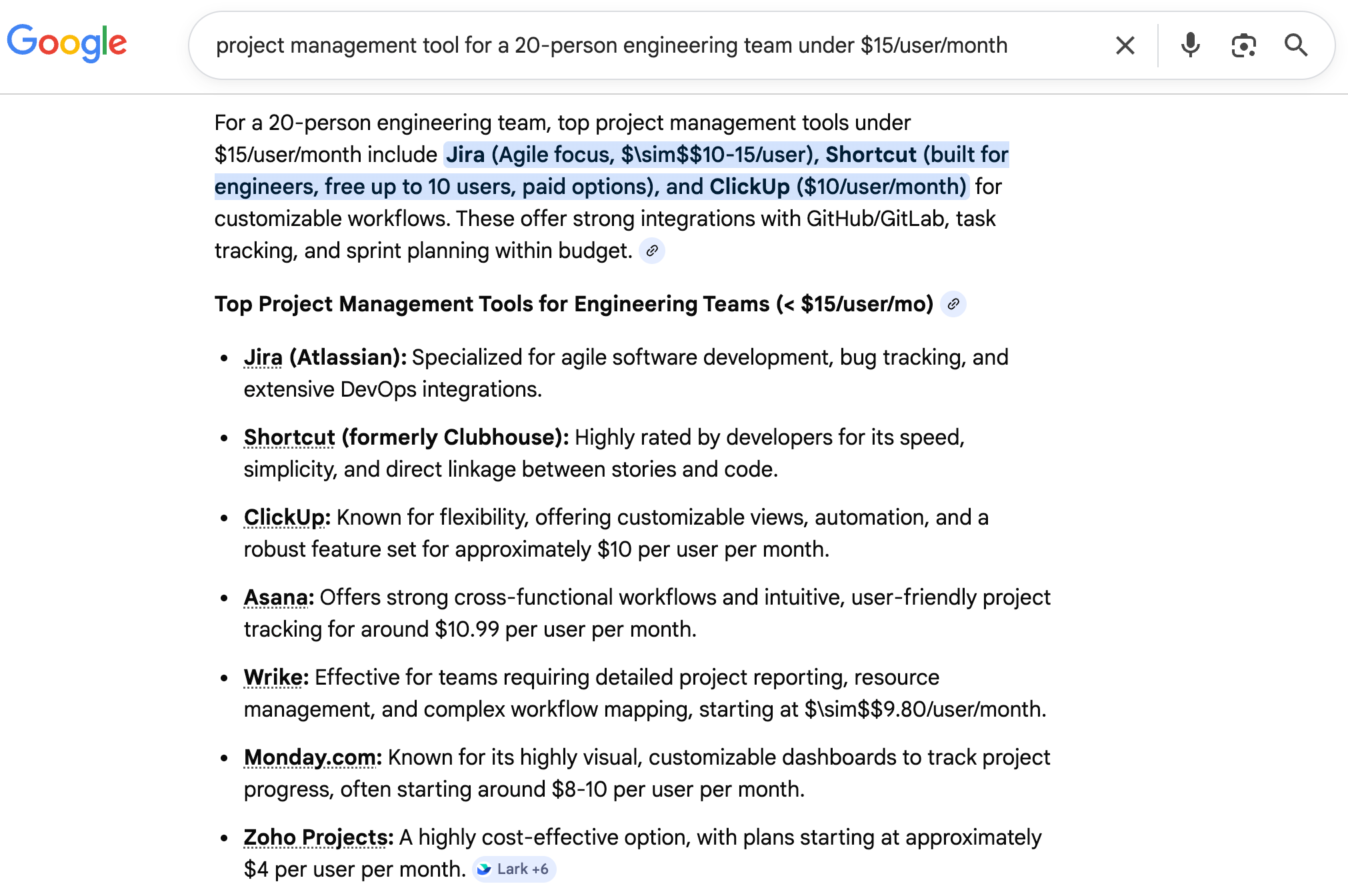
In concrete terms, agentic search is an AI system that browses websites, pulls structured information from multiple sources, weighs it against your criteria, and delivers a recommendation or takes an action. If you ask it to find the best project management tool for a 20-person engineering team under $15/user/month, it won't return a search results page. It will visit product pages, read pricing tables, cross-reference review sites, and come back with a shortlist.
For businesses already considering how AI is reshaping SEO, this is the next step in that evolution.
How AI Agents Browse, Evaluate, and Act on Your Behalf
According to NVIDIA's overview of agentic AI, AI agents follow a four-step loop: perceive, reason, act, and learn. Applied to search, that means an agent gathers data from websites and APIs, uses a language model to reason about which information is most relevant, takes action (like comparing pricing or filling out a form), and refines its approach based on what it finds.
For B2B buyers, the implications are significant. A marketing director evaluating SEO platforms doesn't need to spend three hours reading comparison posts. An agentic search system synthesizes structured data from product pages and returns a clear recommendation. The agent becomes the first “visitor" to your site, deciding whether your content is worth surfacing to the human behind the request. Understanding how to optimize for LLM search visibility is one practical way to prepare for this shift.
That shift has direct consequences for how you structure content and think about discoverability. When an AI agent is doing the browsing, it's not impressed by flashy hero images. It's looking for clean, well-organized data it can parse and trust.
Google's New Signal: The Google-Agent User Agent
Google didn't just talk about agentic search in theory. In early 2025, the company launched a new user agent called Google-Agent, which identifies when an AI agent is browsing a website on behalf of a user. It's the first clear distinction a major search engine has made between human visits and agent-driven visits, and it has direct implications for how you manage your site.
What Google-Agent Does
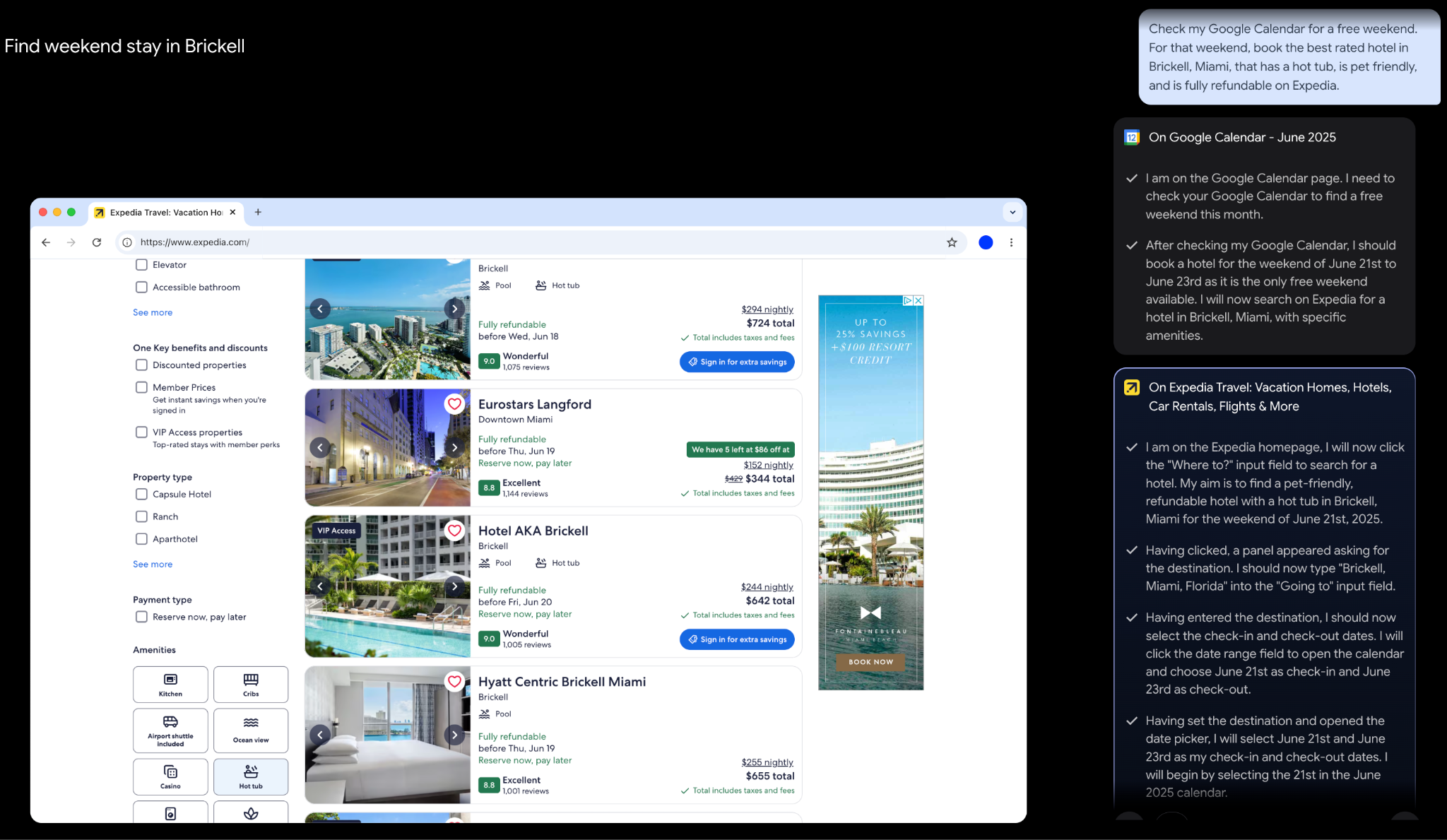
When someone uses an AI-powered tool to research a topic, compare products, or complete a task, Google-Agent is the identifier that shows up in your server logs. It works like a caller ID for AI traffic. Instead of seeing a generic Googlebot crawl, you see a distinct label confirming the visit came from an AI agent acting on a person's behalf.
That distinction matters because the intent behind the visit is fundamentally different. Googlebot crawls your pages to index them for search results. Google-Agent visits your pages to extract specific answers, compare your offering against competitors, or evaluate whether your product meets a user's criteria. The agent isn't passively indexing. It's actively making decisions about your content, which means the quality and structure of what you publish directly affects whether your brand gets recommended.
Source: Google Labs
What This Means for Website Owners
For marketers at SaaS and B2B companies, Google-Agent changes how you think about site access and content structure. If your robots.txt blocks this user agent, or your pages load behind heavy JavaScript that an agent can't parse, you won't show up when AI agents evaluate options in your category, and those agents may be doing the buying research for your next customer.
Google-Agent vs. Googlebot
Here's how Google-Agent differs from the Googlebot you already know:
Check your server logs for Google-Agent traffic now, even if volume is low. Google's launch of a dedicated user agent is a clear signal that agent-driven browsing is already happening, not something on the horizon. If you're running a B2B site and haven't reviewed your robots.txt or server log setup recently, this is a good time to start.
What Is Agentic Search Optimization (ASO)?
Agentic search optimization is a strategy built for a new kind of evaluator. It's not a replacement for SEO – think of it as an additional layer on top of what you're already doing, focused specifically on how AI agents find, read, and act on your pages.
How ASO Builds on SEO Foundations
Agentic search optimization starts with solid SEO. You still need strong keyword relevance, authoritative backlinks, fast page loads, and well-organized site architecture. What ASO adds is a deliberate focus on machine readability, ensuring that when an AI agent lands on your page, it can extract structured facts without guessing. That means explicit schema markup, clear HTML hierarchy, and content organized around direct answers rather than narrative storytelling alone.
Here's a useful analogy: SEO is like designing a storefront that attracts foot traffic. Agentic search optimization is like making sure the store's inventory system is scannable by a purchasing bot that never walks through the door. It just queries your catalog, compares it to three others, and places an order. Both matter, but they serve very different visitors.
SEO vs. Agentic Search Optimization: Key Differences
The differences between traditional SEO and agentic search optimization aren't about abandoning one for the other. They're about emphasis. The table below breaks down where the priorities diverge so you can see exactly what to adjust:
AI agents are already being deployed to handle research, evaluate options, and even make purchasing decisions. For B2B marketers, that makes agentic search optimization a practical priority rather than a future consideration. Companies that treat ASO as an evolution of their existing SEO work, rather than a separate discipline, will be better prepared as agent-driven research becomes more common.
Conclusion
Agentic search is still in its early innings, but the foundation you build now determines whether AI agents include your brand in their recommendations six months from now. The good news is that most of the work, structured data, clean HTML, accessible pages, and FAQ-rich content, strengthens your SEO at the same time. You're layering agentic search optimization on top of what already drives organic growth.
A practical place to start: check your server logs for Google-Agent traffic, review your robots.txt, or add schema markup to your highest-value product page. These are small adjustments that fit into existing workflows and pay off in both traditional and agent-driven search. If you'd like help figuring out where your site stands with AI agents, get in touch and we'll walk you through it.
FAQs
How do you track brand visibility when the visitor is an AI agent instead of a human?
You can start by filtering your server logs for the Google-Agent user agent string to see which pages agents are visiting and how often. Beyond that, tools focused on AI search visibility monitoring can help you understand whether your brand is being cited in agent-generated recommendations.
How does an agentic search system decide which sources to trust?
AI agents typically prioritize pages with well-structured data, consistent information across multiple sources, and clear factual signals like schema markup. Brand authority, citation frequency, and how cleanly your content can be parsed all factor into whether an agent selects your page over a competitor's.
Are we close to truly autonomous AI agents that complete purchases without human approval?
Current systems can research, compare, and recommend options autonomously, but most still require a human to confirm the final action, such as a purchase or contract sign-up. That handoff point is shrinking quickly, and fully autonomous buying workflows are expected to become more common in B2B procurement over the next few years.
Does optimizing for agentic search require a completely different tech stack?
Not at all. Most of the work involves refining what you already have, such as adding schema markup, cleaning up the HTML structure, and making key product information accessible without JavaScript. Your existing CMS and SEO tools can handle the majority of these updates.
Will agentic search make traditional organic traffic metrics like clicks and sessions irrelevant?
Those metrics will still matter for human visitors, but they won't capture the full picture of how your brand is being discovered. Marketers will need to supplement traditional analytics with agent-specific signals, such as crawl frequency by AI user agents and inclusion rates in AI-generated responses.